Sage HRMS vs BambooHR: An Honest Comparison From Someone Who’s Actually Used Both
Are you confused between Sage HRMS, and BambooHR, wondering which one is better for your company? Well, I’ll help you and clear all the doubts you’re having about these two.
I’ve spent the last three years helping mid-size companies pick HR software. And if there’s one comparison I get asked about more than any other, it’s this one.
So here’s my honest answer: these two platforms aren’t really competing with each other. They’re solving different problems for different companies. But because they both show up when you Google “HR software for growing businesses,” people keep trying to compare them like they’re apples to apples.
They’re not.
Let me explain.
The Real Difference
Sage HRMS is built for companies that need serious payroll processing.
We’re talking multi-state tax compliance, union payroll, certified payroll for government contracts. If you’ve got 300 employees across five states and you’re dealing with prevailing wage requirements, Sage HRMS handles that. BambooHR doesn’t.
Whereas BambooHR is built for companies that want their HR software to actually be pleasant to use.
It’s cloud-based, it looks modern, and your employees won’t hate logging into it. That matters more than people realize.
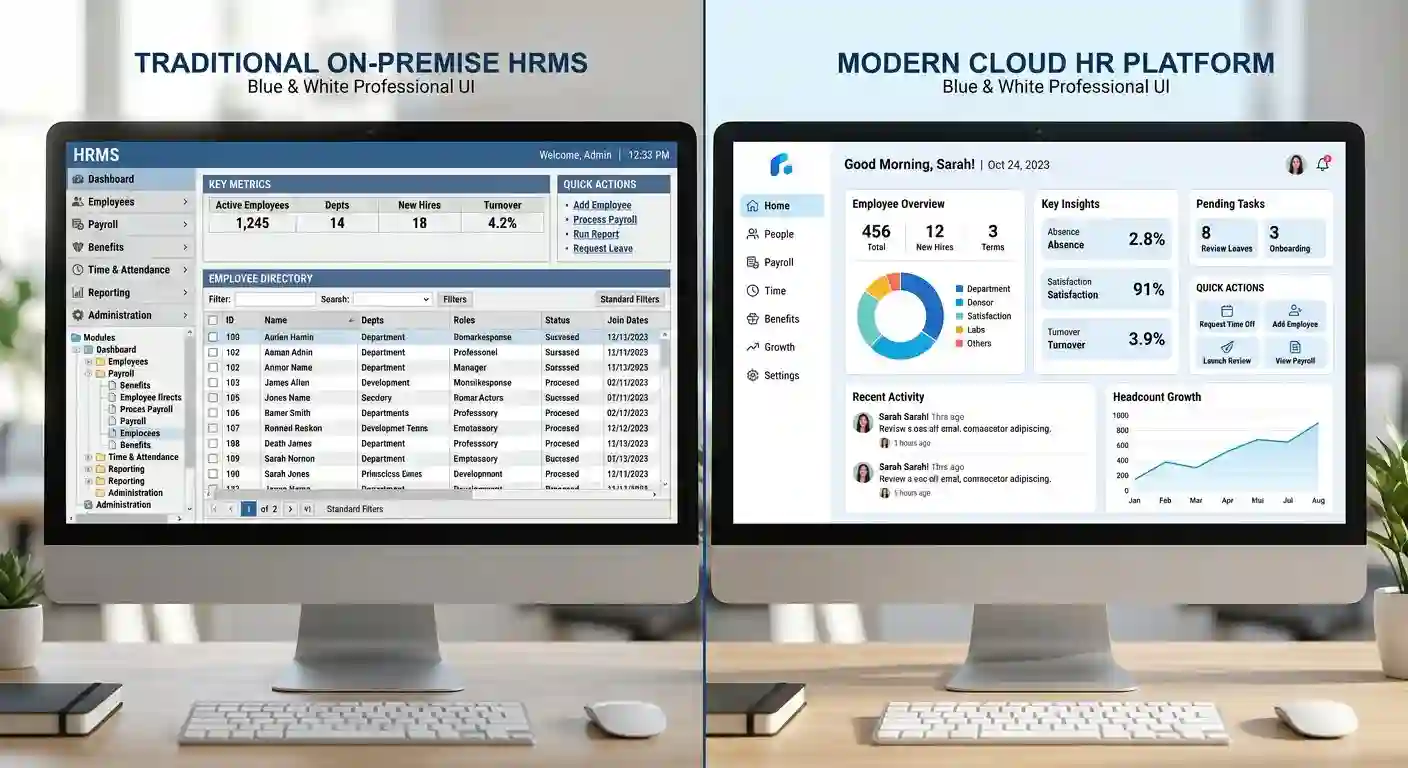
Here’s the thing nobody talks about: Sage HRMS feels like it was designed in 2015 and never really updated after that. The interface is clunky. The mobile app is an afterthought. And the learning curve is steep enough that you’ll need dedicated training time for every person who touches it.
However, BambooHR, by contrast, is genuinely intuitive. I’ve watched new hires figure out the self-service portal without any training at all. That’s not something I can say about Sage HRMS.
Pricing: Where It Gets Interesting
Sage HRMS doesn’t publish its pricing publicly. To know that, you have to call them, get a demo, and go through the whole sales process.
In my experience, a 200-employee company should expect to pay somewhere between $40,000 and $95,000 in the first year when you factor in licensing, implementation, and training. After that, you would be paying around $25,000 to $45,000 annually.
In this context, BambooHR is transparent: $6 per employee per month for the core plan, $8 for the pro plan. Payroll is an extra $6 per employee. Time tracking adds another $3. So for that same 200-person company, you’re looking at roughly $17,000 to $46,000 per year depending on which modules you need.
If you’re looking for a comprehensive Sage HRMS Implementation guide, then you should read this here.
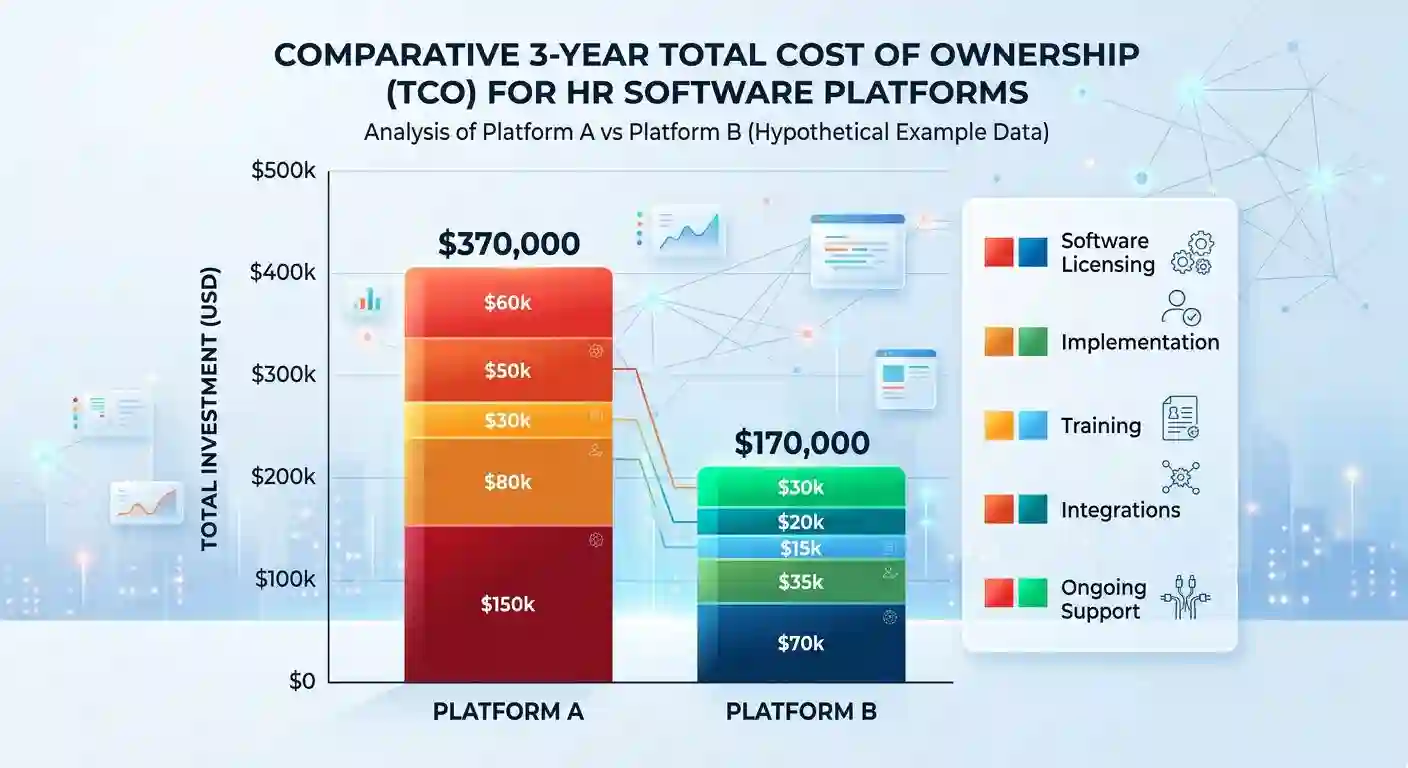
Over three years? Sage HRMS will cost you somewhere between $110,000 and $213,000. Whereas BambooHR runs $43,000 to $67,000.
That’s a massive difference. And it’s one of the main reasons smaller companies lean more toward BambooHR.
But here’s what the pricing comparison misses:
- Sage HRMS includes payroll processing.
- BambooHR charges extra for it
If you need complex payroll with multi-state tax filing, the cost gap narrows significantly. Not enough to make them equal, but enough that you shouldn’t dismiss Sage HRMS on price alone.
Implementation: The Timeline Reality
This is where BambooHR really shines.
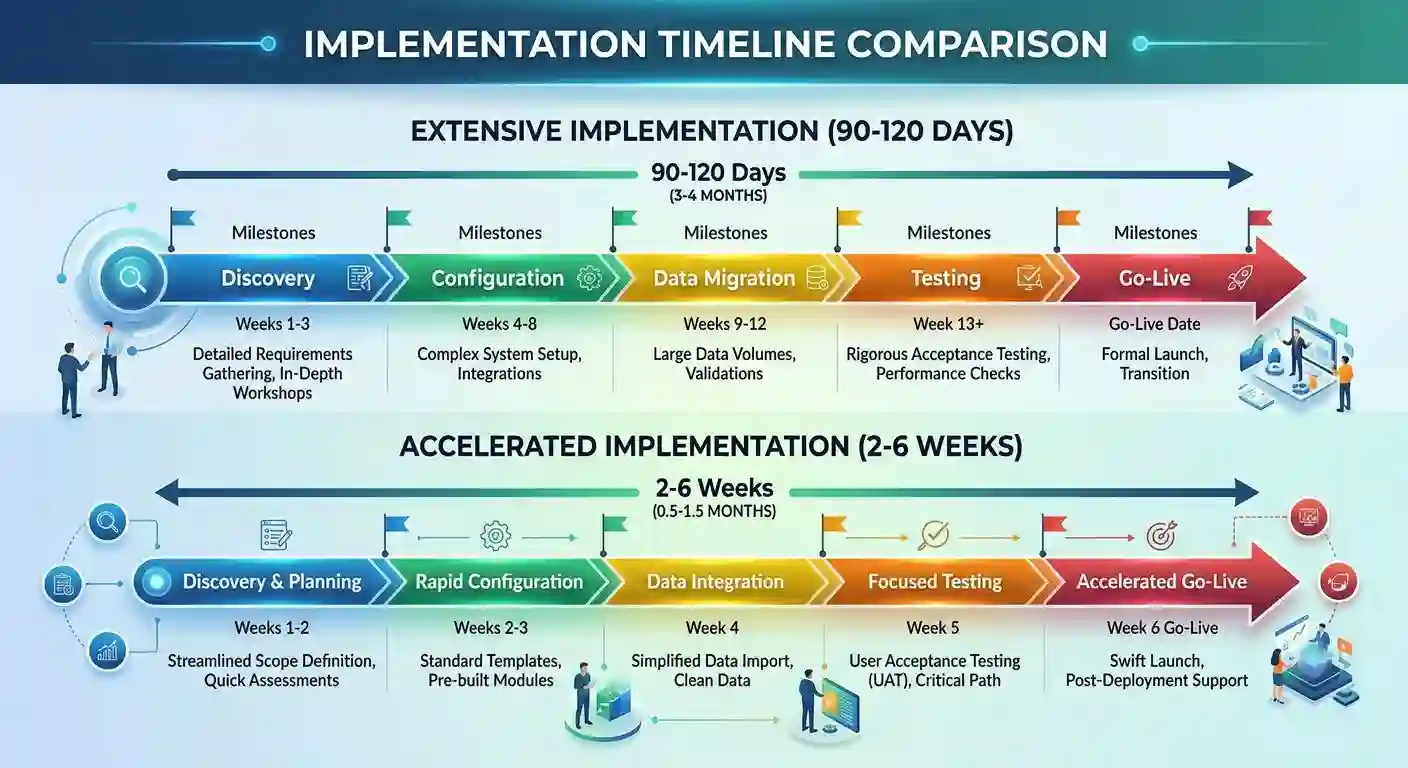
Sage HRMS implementations take 90 to 120 days on average. I’ve seen them stretch to 150 when there’s complex data migration involved. You need IT resources, you need an implementation partner (usually), and you need to budget for training time that nobody accounts for upfront.
BambooHR? Two to six weeks. Sometimes faster if your data is clean and you’re not doing anything fancy.
I helped a manufacturing company in Cleveland switch from spreadsheets to BambooHR last year. We were live in 18 days. That included migrating their employee data, setting up their PTO policies, and training their HR manager. Try doing that with Sage HRMS.
The speed difference matters because every day you spend implementing software is a day your HR team isn’t doing their actual job. For a 50-person company with one HR generalist, a 90-day implementation is brutal.
Where Sage HRMS Actually Wins
I don’t want to give the impression that BambooHR is always the better choice. Apparently, it’s not.
If you’re in construction, manufacturing, or any industry with complex labor compliance requirements, Sage HRMS is the stronger platform. It handles certified payroll, union rules, and multi-state tax scenarios in ways that BambooHR simply can’t match.
I contacted a construction firm in Denver that had employees across Colorado, Wyoming, and New Mexico. Each state had different prevailing wage requirements. Sage HRMS handled it. Whereas BambooHR would have required multiple workarounds and third-party integrations.
Sage HRMS also wins on reporting, as it comes with over 150 pre-built reports and includes Crystal Reports for custom analytics. BambooHR’s reporting is fine for basic stuff, but if you need to build complex workforce analytics, you’ll hit limitations pretty quickly.
And succession planning. Sage HRMS has genuine succession planning tools. BambooHR’s performance management is… adequate. But it’s not going to help you build a leadership pipeline.
Where BambooHR Actually Wins
Of course it’s user experience. Sage HRMS is not even close to it!
For this comparison, I’ve observed both platforms at similar-sized companies. The adoption rates tell the whole story.
With BambooHR, I typically see 85-90% employee adoption within the first month. With Sage HRMS, it’s about 60-70% after three months.
And this gap matters because HR software only works if people actually use it. If your employees are still emailing their managers to request time off because they can’t figure out the self-service portal, you’ve wasted your money, isn’t it right?
BambooHR also wins on integrations as it connects to over 100 third-party tools through its marketplace, including Slack, Google Workspace, and most major accounting platforms.
While Sage HRMS integrates well with other Sage products, however, its third-party options are limited. And if you need a custom integration, you’ll probably need a developer.
The mobile app situation is embarrassing for Sage HRMS. BambooHR’s mobile app is fully functional. Sage HRMS’s mobile app feels like a demo that never got finished.
The Industry Breakdown
After getting in touch with companies across different sectors, here’s what I’ve seen:
- Healthcare organizations tend to prefer Sage HRMS for its compliance tracking. HIPAA requirements, credential management, complex scheduling. Sage handles it better.
- Tech companies almost always go with BambooHR. They care about user experience, they want fast implementation, and they don’t have the complex payroll scenarios that make Sage HRMS necessary.
- Manufacturing is split. If it’s simple manufacturing with standard payroll, BambooHR works fine. If there’s union involvement or certified payroll requirements, Sage HRMS is the only real option.
- Construction? Sage HRMS. Almost always. The payroll complexity alone makes it the obvious choice.
- Nonprofits love BambooHR because it’s affordable and easy to implement with limited IT resources.
The Migration Question
People also ask, “If we start with one, how hard is it to switch to the other?“
Going from Sage HRMS to BambooHR: relatively straightforward. You export your data, map it to BambooHR’s format, and import it. Takes about 4-8 weeks and costs $5,000-$15,000.
Going from BambooHR to Sage HRMS: much harder. Sage HRMS’s on-premise architecture makes data migration more complex. Expect 90-120 days and $15,000-$40,000 in implementation costs.
The direction matters. Switching to BambooHR is easier and cheaper than switching to Sage HRMS. That’s worth considering if you’re not sure which way your company is headed.
So Which One Should You Pick?
If you’re a 50-person marketing agency in Austin that just needs basic HR functionality and wants something your team will actually use, go with BambooHR. Don’t overthink it, just go for it!
If you’re a 400-person construction company with employees in seven states and union contracts, Sage HRMS is probably your only real option. BambooHR can’t handle what you need.
If you’re somewhere in the middle? That’s where things get more interesting.
I’d argue that most companies in the 100-300 employee range should start with BambooHR unless they have specific compliance requirements that demand Sage HRMS. Here’s why: you can always upgrade to a more complex system later. But starting with a platform that’s too complex for your current needs creates adoption problems that are hard to fix.
I’ve seen too many companies buy Sage HRMS because they thought they needed the “enterprise” solution, only to discover that half their employees never learned how to use it. That’s a $100,000 mistake.
The best HR software is the one your team will actually use. Everything else is secondary.
Last updated July 2026. Pricing and features may change after this publication. Always verify current information with vendors directly.